

Ironclad Builds Tierlist: Stærkest, Stærk, Gennemsnitlig & Andet
 46
46








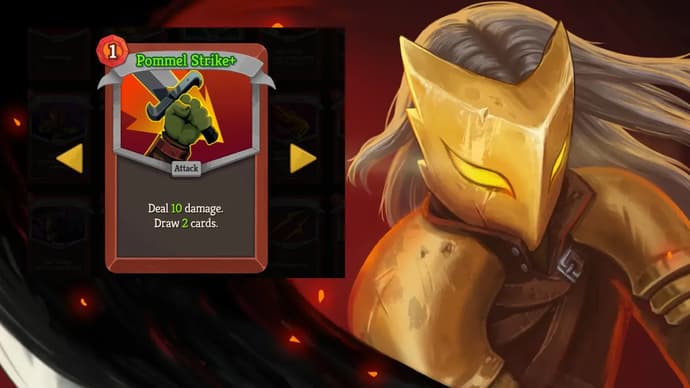
Ironclad runs six archetypes in Slay the Spire 2: Infinity Deck, Strength, Block, Exhaust, Bloodletting, and Strike. Key cards anchor each one, but none lock into a fixed sequence — exhausting unnecessary cards, retaining draw engines, and managing energy per turn determines how far any build goes.
Strongest Ironclad Build (Tier-S): Hellraiser Infinity Deck
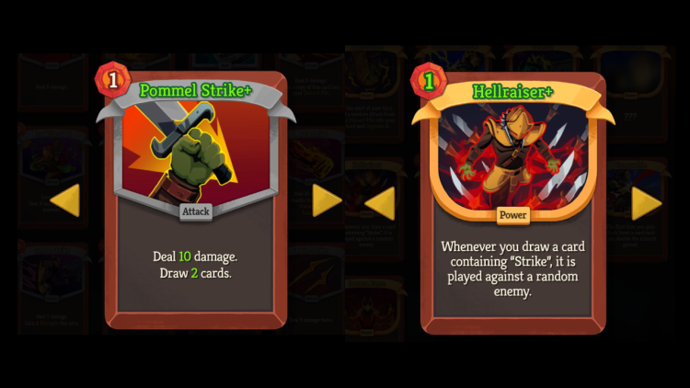
The Infinity Deck is the most powerful Ironclad build in Slay the Spire 2 early access — it runs on Hellraiser and Pommel Strike, but the configuration is flexible: burn unnecessary cards through Exhaust, retain draw pieces, and manage energy each turn.
Card | Type | Effect | Upgraded |
Hellraiser | Power | Auto-plays every drawn Strike against a random enemy for free | Reduced energy cost |
Pommel Strike | Attack | Deals 9 damage, draws 1 card | Deals 9 damage, draws 2 cards |
Stampede | Attack | Plays all remaining non-Strike attacks in hand | Applies bonus damage |
Exhaust cards | — | Remove deck clutter mid-run, keeping only loop-relevant pieces in rotation | — |
Play Hellraiser, draw into Pommel Strike, it fires automatically against a random enemy, draws again, repeats. One Pommel Strike exits the loop before it closes — two copies are the minimum, and the upgraded version draws two cards per trigger rather than one, which tightens the cycle. Exhaust cards are not optional here: they strip the deck down during the run so each draw pulls what the loop actually needs rather than dead cards. The loop has one hard stop — enemies with a per-turn damage cap, including the Waterfall Giant boss, absorb every hit without dying, which requires an alternate win condition for those fights. Against standard encounters and most elites, a functioning loop closes the fight without additional setup.
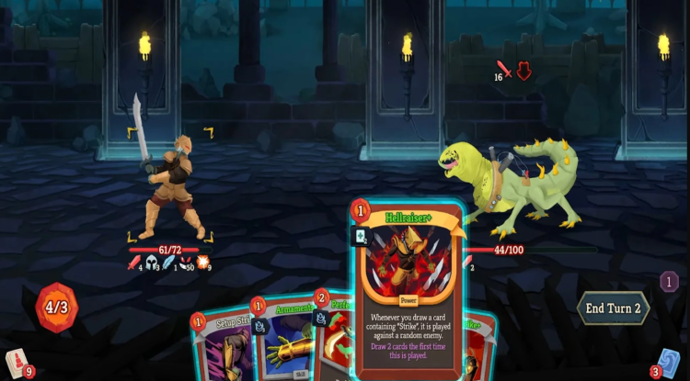
Battle Trance is a forbidden card in this build. Playing it draws three cards but blocks all further draws that turn, breaking the cycle Hellraiser depends on — it is the single card that most directly dismantles the strongest Ironclad build in Slay the Spire 2.
Strike Dummy adds flat damage to every Strike played, compounding across each loop iteration. Read the complete relics guide to identify Ironclad's highest-priority items: Ruined Helmet doubles the first Strength gained each combat, and Molten Egg auto-upgrades every Attack card added to the deck. Beating Remnant caps single-turn incoming damage at 20, buying the setup turns the loop requires against hard-hitting elites.
Powerful Ironclad Build (Tier-A): Strike Deck
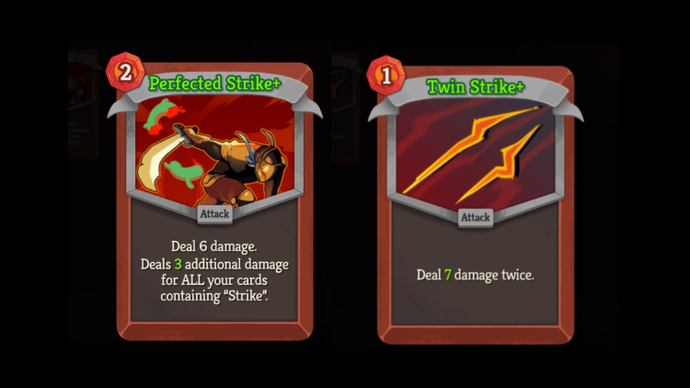
Perfected Strike scales by 2 damage for each card in the deck whose name contains Strike, turning the full Strike card pool into a damage multiplier with no additional Powers required.
Card | Type | Effect | Upgraded |
Perfected Strike | Attack | Base damage plus 2 for each Strike-named card in the deck | Base damage plus 3 per Strike-named card |
Twin Strike | Attack | Deals 5 damage twice, counts toward Perfected Strike | Deals 7 damage twice |
Pommel Strike | Attack | Deals 9 damage and draws 1 card, counts toward Perfected Strike | Deals 9 damage and draws 2 cards |
Hellraiser | Power | Converts drawn Strike cards into free automatic attacks | Reduced energy cost |
Expect a Fight | Power | Generates energy on turns when high-cost cards resolve | Generates 2 energy |
Perfected Strike enters every run at 18 base damage, since Ironclad's starting five Strikes already sit in the deck. Each Twin Strike, Pommel Strike, and other Strike-named card added pushes that number higher without requiring Demon Form or Inflame to activate. Hellraiser operates differently here than in the Tier-S build — with a full deck rather than a stripped one, drawn Strikes fire automatically and builds pressure without requiring the loop to close. Expect a Fight covers the 2-energy cost of Perfected Strike, allowing it to resolve alongside block cards in the same turn.
The deck falls off in late Act 3 without secondary scaling, so Taunt's Vulnerable application or a Strength relic keeps damage output relevant against high-HP bosses.
Average Ironclad Build (Tier-B): Block Build
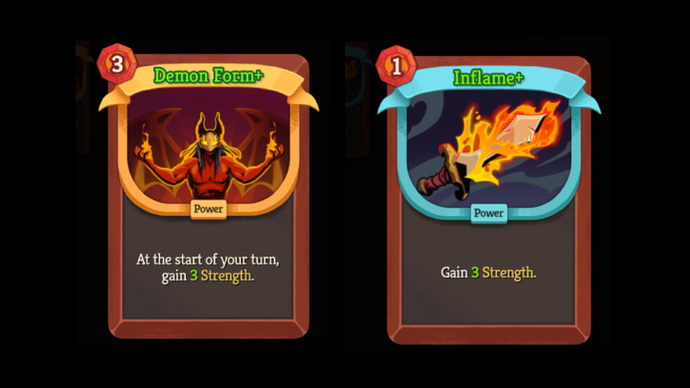
Strength build applies flat damage bonuses through Inflame, Demon Form, and Rupture, then deploys multi-hit attacks that multiply the bonus across each individual strike.
Card | Type | Effect | Upgraded |
Demon Form | Power | Grants 2 Strength at the start of every subsequent turn | Grants 3 Strength per turn |
Inflame | Power | Immediately grants 2 Strength for 1 energy | Grants 3 Strength |
Rupture | Power | Grants 1 Strength whenever Ironclad loses HP on his turn | Grants 2 Strength per HP loss |
Whirlwind | Attack | Deals 5 damage to all enemies X times per energy spent | Deals 8 damage per hit |
Fight Me! | Attack | Hits twice and grants 2 Strength, enemy gains 1 Strength | Hits twice and grants 3 Strength |
I see players drop Demon Form for its 3-energy upfront cost, but the card takes over any fight that runs past turn three. Whirlwind gains the most from Strength stacking because each individual hit receives the full flat bonus: 10 Strength on a five-hit Whirlwind adds 50 damage to the total output. Rupture opens a secondary engine when paired with Crimson Mantle or Brand, converting self-inflicted HP loss into additional Strength every turn. Strength does not expire between turns unless an enemy removes it, which makes the build scale better the longer an elite or boss fight extends.
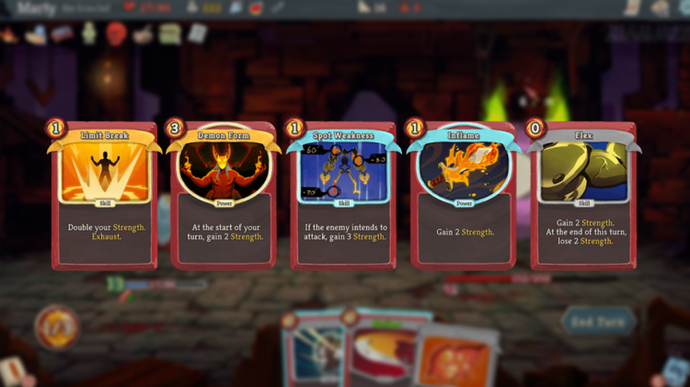
The ceiling sits below the Infinity and Strike builds because Demon Form requires surviving a 3-energy setup turn, and early-game damage before it lands can be inconsistent against aggressive elites.
Worst Ironclad Build (Tier-C): Isolated Bloodletting
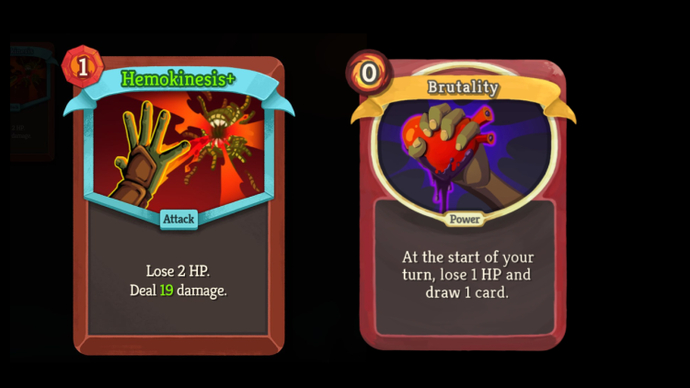
Bloodletting cards exchange HP for power, but without Rupture converting that HP loss into Strength and Reaper resetting the health bar, the self-damage accelerates the clock without generating a win condition.
Card | Type | Effect | Upgraded |
Hemokinesis | Attack | High single-target damage, costs 2 HP | Increased damage, still costs 2 HP |
Brutality | Power | Drains 1 HP per turn for a free card draw | Innate, draws at the start of turn without manual trigger |
Bloodletting | Skill | Costs 3 HP to generate 2 energy | Costs 3 HP to generate 3 energy |
Offering | Skill | Costs 6 HP, grants 2 energy and draws 3 cards, Exhausts | Costs 6 HP, grants 2 energy and draws 5 cards, Exhausts |
Without Rupture, Hemokinesis and Brutality drain the HP pool without building Strength. Bloodletting generates 2 energy for 3 HP, which reads as efficient until Act 3 bosses hit for 30 per turn and the starting HP total has been steadily bled down across earlier fights. Offering's 6-HP cost for a hand refill compounds the problem without Demon Tongue converting that self-damage into a lasting buff. Burning Blood heals 6 HP after each combat, but a run built around self-damage cards burns through that restore in a single elite encounter.
Drafting both Rupture and Reaper alongside these cards moves the archetype into Tier-A territory; without either, the build loses HP with no structural return.
Slay The Spire 2 Builds for Beginners
Ironclad starts at 80 HP and restores 6 HP after every combat through Burning Blood, absorbing the early mechanical mistakes that end lower-HP characters' runs outright. Our beginner guide recommends selecting Ironclad first, drafting cards that function without setup, and paying to remove basic Strikes at every Merchant visit. Block-first play suits new players because Shrug It Off generates both Block and a card draw in one play, and Body Slam converts accumulated Block directly into damage without an additional engine around it. Elites should be fought two to three times per act — each one drops a relic, which applies passive bonuses across every subsequent fight and compounds faster than individual card purchases at the shop.
Every campfire defaults to upgrading over resting unless HP sits critically low, since an upgraded Demon Form or Whirlwind alters boss fight outcomes more than the 24 HP a rest restores. Progression in Slay the Spire 2 runs through the epochs timeline, a global unlock system that permanently adds cards, relics, potions, Ancients, and alternate acts through score accumulation, elite kill counts, and act clears across all characters. One Ironclad run unlocks the Silent with no win required, so a failed first attempt still counts toward expanding the full roster.

Vitalii Diakiv skriver spilblogs og -guides med fokus på de seneste udgivelser og spil, der matcher popkulturelle fænomener. Derudover dækker han esportsbegivenheder som Counter-Strike 2, Marvel Rivals, League of Legends og andre.
Vitalii leverer dybdegående spilnyheder og esportsdækning med fokus på Fortnite, CS2, Marvel Rivals og LoL. Han kuraterer lister over spilvalg og afdækker nye detaljer sammen med sine læsere. Når han skriver nyheder, søger han emner, der vækker hans nysgerrighed, og når han redigerer blogs, giver han dem et personligt præg med sit eget perspektiv.



 Alt, hvad vi ved om Crimson Desert indtil videreCrimson Desert-guide: udgivelsesdato, platforme, spilsystemer, historiedetaljer og udgaver. Find ud af, hvad du kan forvente af Pearl Abyss' ambitiøse action-RPG i en åben verden.
 fauesde
 Ny CS2-opdatering: Genindlæsning, gameplay og kortguiderCS2 får en større opdatering med omarbejdet genladning, reducerede ammunitionsreserver og kortguider i spillet. Se alle ændringer og reaktioner fra fællesskabet i vores oversigt.fauesde
 Crimson Desert Leveling SystemCrimson Desert mister XP og niveauer — progression kommer fra artefakter, udstyr og handlinger.
 stawraith
 Roblox Attack on Titan Revolution-koderRoblox Attack on Titan Revolution-koder - Indløs for gratis spins, kejsernøgler og eliksirer for at øge dine fremskridt.
 Dima Ostapchuk