

Crimson Desert færdighedssystem forklaret
 30
30








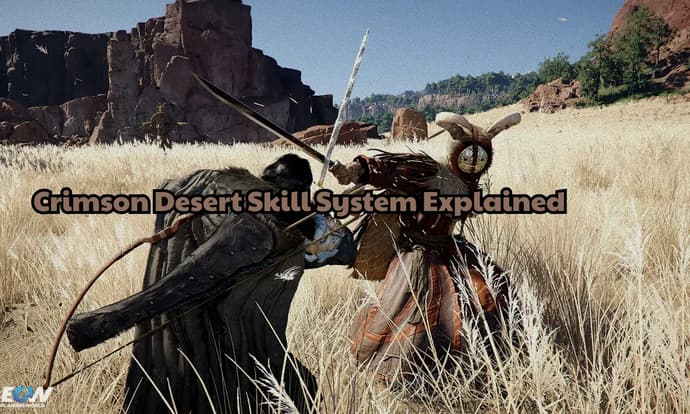
The Skill System in Crimson Desert offers a unique approach to character progression, moving away from traditional RPG mechanics. If you want a broader overview of the game, check out our guide on Everything We Know About Crimson Desert. Instead of a classic level-based system and rigid class structures, the game emphasizes freedom of choice, world exploration, and interaction with its environment. The Skill System becomes a central part of this philosophy, combining progression with combat and allowing each player to shape their own playstyle.
How Progression Works
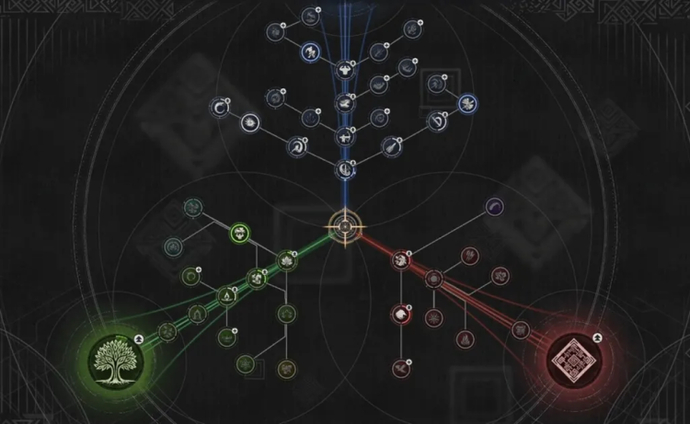
At the core of progression in Crimson Desert is the Artifact System. This system is a key part of the overall Crimson Desert Leveling System, which defines how players grow their character throughout the game. Throughout the game, players obtain special Abyss fragments by completing quests, defeating bosses, and exploring the open world. These fragments effectively replace traditional skill points and are used to develop the character.
With them, players can increase key attributes such as health and stamina, unlock new abilities, or enhance existing skills.
It’s also worth noting that progression is not limited to resource allocation. The Skill System includes a mechanic where abilities are learned through interaction with the world. Some moves cannot simply be unlocked—they must first be observed in use by enemies or NPCs, after which the player gains the ability to learn them. This approach makes character progression more engaging and directly tied to gameplay experience.
Skill Types and Combat System
The Skill System in Crimson Desert is closely integrated with the combat system and largely defines how battles unfold. Players gain access to a wide range of weapons, including swords, spears, axes, and shields, as well as ranged attacks, allowing them to adapt the gameplay to their preferred style.
Abilities are not separate from gameplay—they are deeply connected to a combo system, where attacks flow seamlessly into one another, forming long chains of strikes.
In addition to standard attacks, hand-to-hand combat and grappling mechanics play an important role, enabling throws, grabs, and other physical interactions with enemies. Elemental effects—such as burning, freezing, or stunning—also significantly impact combat, opening up additional tactical options.
Mobility is another key aspect of the combat system. Dodges, rolls, and counterattacks are fully integrated into combat combinations, making each fight dynamic and timing-dependent. As a result, the game focuses not on simple button-mashing, but on situational control, proper timing, and the ability to chain skills into effective combos.
Builds and Player Freedom
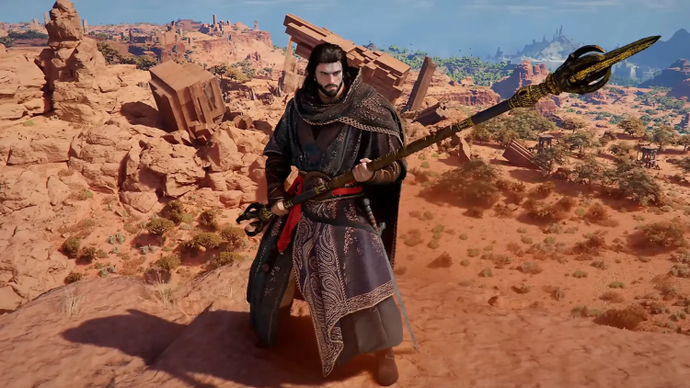
Crimson Desert does not feature a traditional class system, which is one of its defining characteristics. Instead of choosing a predefined role such as warrior, mage, or archer, players shape their own playstyle by combining skills, attributes, and equipment.
This approach allows for the gradual creation of a unique build that evolves alongside progression and the discovery of new abilities.
Thanks to this flexibility, players can tailor their character to their preferred playstyle—whether focusing on mobility, endurance, aggressive combat, or a hybrid of different approaches. The system encourages experimentation and individuality, as no two builds are exactly the same, turning progression into a creative process.
What Makes It Stand Out Among RPGs
The progression system in Crimson Desert differs significantly from traditional RPGs, where progression is typically based on gaining experience, leveling up, and selecting a fixed class.
In this game, character development is not tied to traditional levels but is instead built around exploration and acquiring special resources that unlock new possibilities. Importantly, players are not restricted to a single role—the system does not force them into predefined archetypes, fundamentally changing the approach to character development.
Another key distinction is how abilities are obtained. While most RPGs unlock skills through skill trees or automatic level progression, Crimson Desert requires some abilities to be learned through interaction with the world, by observing enemies or NPCs.
Combined with the deep integration of the combat system, this means progression is defined not only by numbers but also by how players engage with the game’s mechanics. Ultimately, the system emphasizes freedom of experimentation, individual playstyles, and practical skill over formal character leveling.
Conclusion
The Skill System in Crimson Desert appears to be one of the game’s core features. It blends classic RPG elements with a more modern approach, where character development depends on player actions rather than simply accumulated experience.
The final version of the game shows that this progression system truly stands out among modern action RPGs, placing a strong emphasis on freedom of choice and experimentation.



 Crimson Desert-inventarguide: Små poser, mellemstore poser og hvordan man opbevarer genstandeCrimson Desert lanceres med 50 inventarpladser og intet opbevaringssystem. Sådan udvider du din bæreevne.
 vitaliiD
 League of Legends Nyt til Fools Day-skins: Oversigt, Splash Arts og prisRiot Games afslører seks nye sjove aprilsnar-skins til LoL, inklusive Prestige Money Miser Mordekaiser og Choncc Kench. Læs vores fulde oversigt over splash arts og priser!
 Chillplay
 GGbet Dota 2 ESL One Birmingham 2026 OversigtDota 2 ESL One Birmingham 2026 Oversigt: format, hold, tidsplan og præmiepulje. Følg den største forårs-LAN-turnering.
 Dima Ostapchuk
 Indvirkningen af ESL Pro League S23 på invitationer til IEM Köln Major 2026Hvordan ESL Pro League S23 påvirker invitationerne til IEM Cologne Major 2026: opdaterede VRS-ranglister, tophold og kampen om direkte kvalifikation til Stage 3 forklaret.
 fauesde